The Challenge
The company’s design development handoff processes. My project partner Lukas Franz and I formed our first hypotheses based on our own work experience. But those first hypotheses needed to be validated or refuted via research.
What is currently failing?
Some questions get frequently repeated during handoff meetings. Design system knowledge varies a lot from person to person.
What suggestions do the people involved have?
Our first ideas snapped to some form of standarisation of documentation and project onboarding.
What is working well?
Some projects use advanced tools for clear documentation and established feedback loops, and have consistent back and forth communication between designers and developers.
The process
Figuring that we wanted to prioritise a deep understanding of our coworker’s needs to start delivering valuable solutions (even if they are small at first), we chose to follow the Design Thinking framework.



Empathy
Discovering what our users need via primary research (quantitative survey and qualitative interviews)

Definition
Defining the problem we want to solve through Personas and Empathy maps.

Ideation
Brainstorming potential solutions together with a user selection in a co-creation workshop.

Prototyping
Creating a visual mapping of the company workflows and solution prototypes.
Empathy
Discovering what our users need via primary research (quantitative survey and qualitative interviews)
Definition
Defining the problem we want to solve through Personas and Empathy maps.
Ideation
Brainstorming potential solutions together with a user selection in a co-creation workshop.
Prototyping
Creating a visual mapping of the company workflows and solution prototypes.
Research Insights
After conducting user interviews, a survey and an interdiscipliary ideation workshop among our coworkers, we came to the following conclusions:
40%
of workers report communication gaps
Especially in the early concept stages of a project
3 in 5
workers report unclear responsibilities during handoff
Which causes delays and errors.
4.6/10
was the score of consistency across projects
Which hints at a lack of company wide quality assuring standards.
Results
Based on our user research and the interdisciplinary ideation session we presented the following solutions:
Solution A – standard workflow mappings
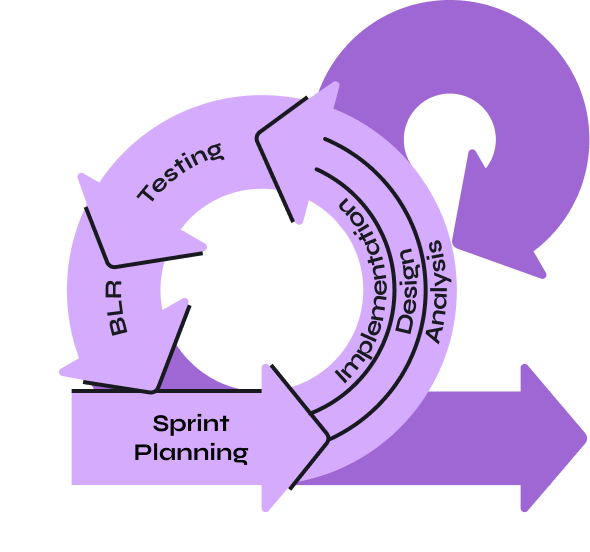
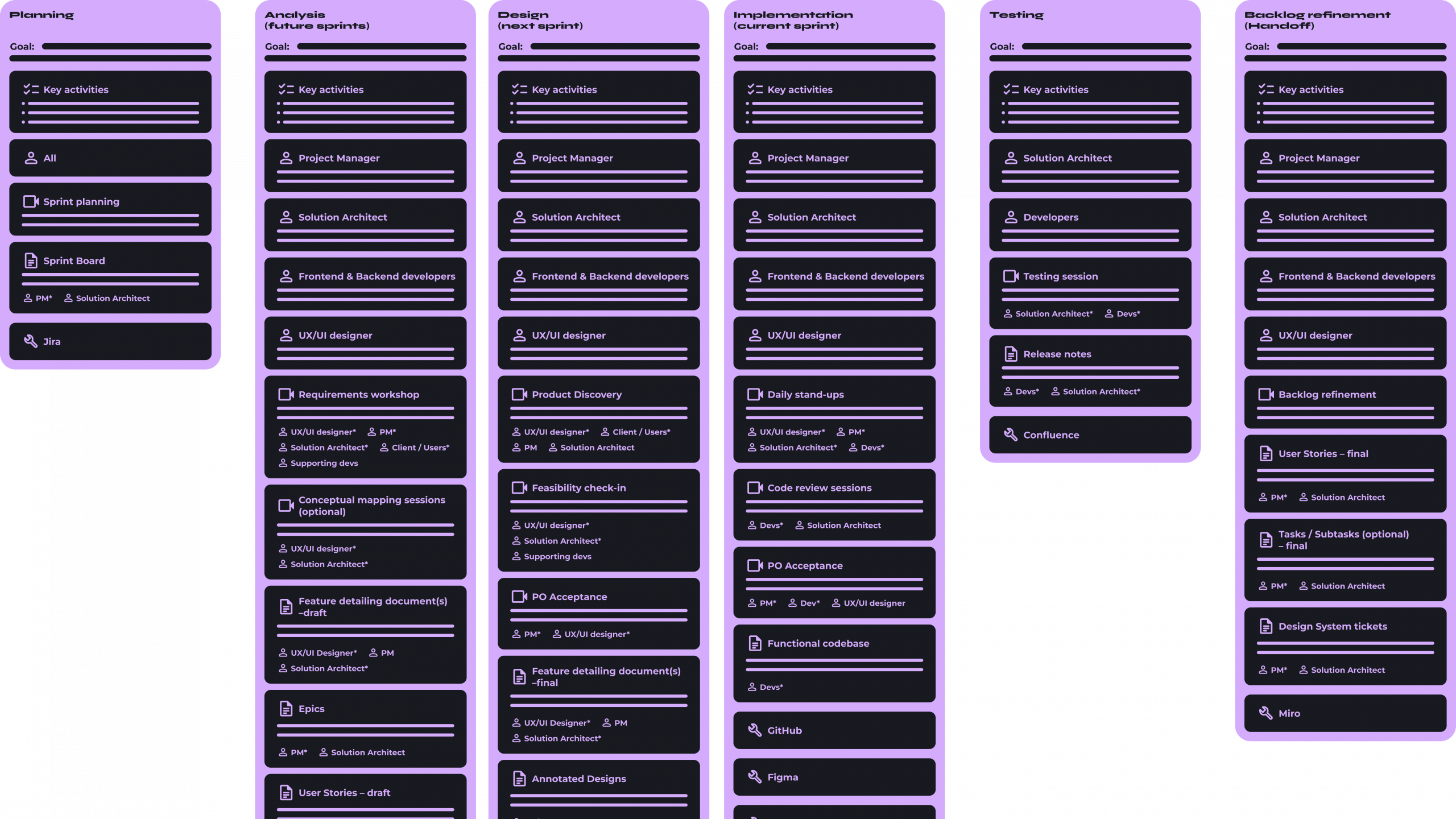
We presented a mapping of each phase in a standard project, differentiating between a waterfall and an agile setup.
See more details
Both mappings use a consistent visual language, clearly outlining each phase, its deliverables, requirements, and responsible roles.
These standard mappings were developed through feedback sessions involving workers from various profiles and projects.
The plan is to attach a project’s specific mapping to the project overview documentation and keep it updated. This approach aims to enhance visibility and accountability.
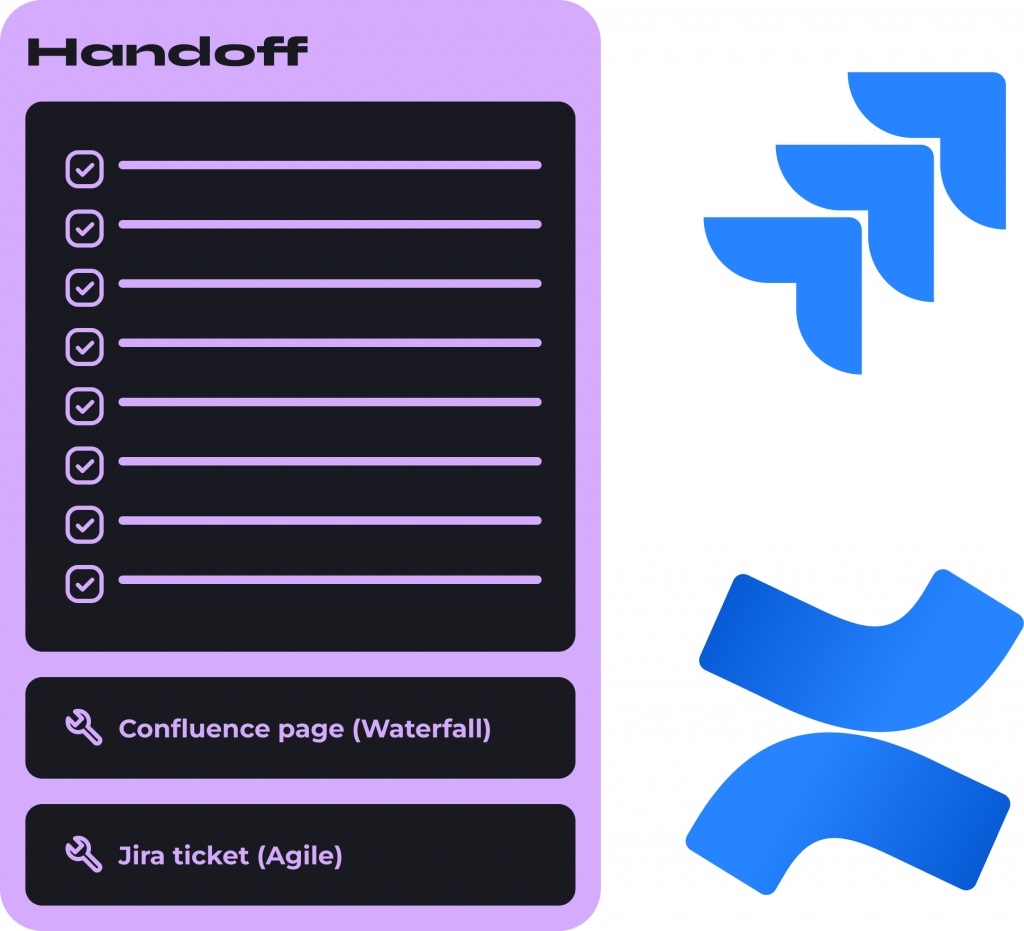
Solution B – standardised handoff checklists
Additionally we came up with the first iteration of checklist formats for each possible setup. Agile setups work with Jira Tickets while Waterfall ones work more with Confluence.
Measuring Impact
After gathering initial feedback on the proposed solutions, it’s fundamental to test them and evaluate their impact. For that we proposed a research plan:
1
When?
12 months from implementing the checklists and the workflow mappings.
2
How?
We would begin with follow-up interviews and surveys on key ongoing projects. Depending on initial findings, we may expand research with methods like field studies, card sorting, or tree testing.
3
What?
We defined a set of metrics and trends to evaluate: acceptance rate, resistant pain points, ineffective solutions to be removed, project-specific trends, and improvements.